
Argentina’s relationship with the International Monetary Fund has long been one of the most closely watched in global finance. It is not just a story about debt. It is a story about credibility, inflation control, capital access, and the limits of economic adjustment in a country that has lived through repeated financial stress. When debt talks with the IMF move forward, markets do not merely ask whether Argentina can pay. They ask what kind of economy Argentina is trying to become.
The current negotiations matter because they can influence far more than the schedule of repayments. They can affect reserves, exchange-rate policy, fiscal room, investor confidence, and even the government’s political capital. In a country where policy announcements can move bonds and the peso in the same afternoon, every clause in a deal carries economic weight.
Why the IMF remains central to Argentina’s economic story
Argentina is one of the IMF’s largest and most persistent borrowers. The country has returned to the Fund repeatedly over the last several decades, usually after a combination of fiscal imbalance, currency pressure, and depleted foreign reserves. That pattern is important because it shapes how markets interpret any new agreement: not as a one-off financing event, but as a test of whether Argentina can break a cycle.
The most recent IMF program was designed to stabilize an economy already under pressure. Inflation has remained exceptionally high, the peso has been under constant strain, and reserves have often been too thin to provide a reliable buffer against external shocks. In that environment, debt talks are not just about debt service. They are about whether Argentina can avoid another balance-of-payments crisis.
For the IMF, the central concern is straightforward: can Argentina deliver a credible adjustment path without triggering another round of instability? For Argentina, the issue is more delicate. Can it secure enough breathing room to keep growth alive while still satisfying the Fund’s demands for fiscal discipline and monetary restraint?
The core economic variables at stake
Several key indicators will determine how meaningful any IMF deal really is. The first is the fiscal deficit. Argentina cannot stabilize its macroeconomic position if public spending continues to outpace revenues by a wide margin. The second is inflation, which has been eroding household purchasing power and distorting business decisions. The third is foreign exchange reserves, which remain essential for import financing, debt service, and market confidence.
Debt talks also matter because Argentina’s policy framework is tightly linked to its exchange-rate regime. When a country has limited reserves and high inflation, the exchange rate becomes more than a price. It becomes a pressure valve, a political issue, and a signal to the market. That is why discussions with the IMF often lead to debate over devaluation, capital controls, and the pace of currency reform.
In practical terms, the negotiations could influence:
- the timing and size of IMF disbursements
- the pace of fiscal adjustment
- the scope of exchange-rate flexibility
- the level of reserve accumulation targets
- the government’s ability to refinance external obligations
Each of these variables matters on its own. Together, they determine whether Argentina gains a temporary reprieve or a more durable macroeconomic reset.
What the IMF is likely to demand
The IMF does not lend based on optimism. It lends based on conditionality. That means any renewed support or program modification will almost certainly be tied to measurable targets. Historically, those targets have centered on reducing the fiscal deficit, limiting monetary financing of the budget, and strengthening reserve accumulation.
Argentina’s challenge is that each of those objectives has political and social costs. Cutting subsidies can reduce the deficit, but it can also raise utility bills. Tightening monetary policy can help slow inflation, but it may suppress credit and investment. Allowing the peso to weaken can improve external competitiveness, but it also risks fueling inflation in a country where price expectations are already fragile.
This is where IMF talks become more than an accounting exercise. They become a negotiation over sequencing. Should Argentina front-load austerity, or can it phase reforms more gradually? Should the exchange rate adjust sharply now, or should the government preserve stability and risk an eventual correction later? These are not academic questions. They determine whether the country buys time or merely delays the next adjustment.
How markets are reading the negotiations
Markets tend to react less to the existence of negotiations than to their credibility. In Argentina’s case, investors know the script. The key question is whether this round is different enough to justify a change in pricing.
Bondholders are watching for three things. First, whether the government can secure a program that reduces near-term default risk. Second, whether the IMF agreement is backed by realistic assumptions rather than politically convenient forecasts. Third, whether policy implementation will actually follow the announced targets.
Equity markets and domestic businesses are watching something slightly different: the probability of exchange-rate normalization. A more predictable currency regime can improve planning, pricing, and import access. But if the adjustment is mishandled, it can trigger another inflation spike and squeeze demand further. For businesses already operating in a high-volatility environment, predictability is often more valuable than theoretical competitiveness.
There is also the issue of access to capital. Argentina’s sovereign risk premium has often reflected not only debt levels, but confidence in policy continuity. A credible IMF deal can lower borrowing costs at the margin. A weak deal, by contrast, can do the opposite: it may postpone crisis, but it rarely reduces risk perception.
Inflation, the silent negotiator
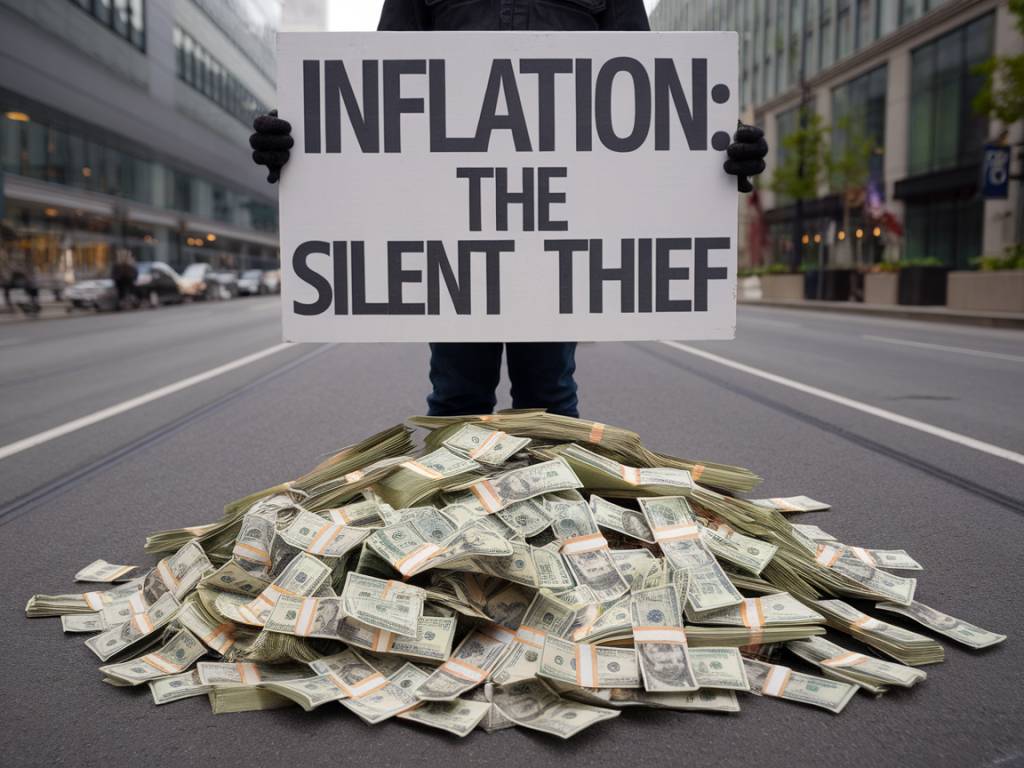
Argentina’s inflation problem is not simply a side effect of fiscal weakness. It is one of the main constraints on policy itself. Once inflation becomes deeply embedded, every policy move has second-order effects. A rate hike may cool demand, but it can also increase the cost of servicing domestic debt. A devaluation may improve external accounts, but it can rapidly feed into prices. Wage negotiations become more aggressive. Businesses adjust prices more often. Households shorten their planning horizons. The whole economy becomes more reactive and less strategic.
This is why debt talks with the IMF can reshape the economy even if they do not immediately improve living standards. A program that restores a degree of macro stability can reduce inflation expectations over time. That, in turn, can improve savings behavior, investment planning, and credit allocation. But the benefits are usually delayed, while the costs are immediate. In Argentina, that asymmetry is politically explosive.
A useful comparison is not with a textbook emerging market adjustment, but with a household trying to refinance expensive debt while income remains unstable. Refinancing helps only if the borrower stops spending in the same way that caused the problem. Argentina faces the same logic at national scale, with more politics and fewer margin calls.
The political economy of adjustment
No IMF program in Argentina exists in a vacuum. The political environment is always part of the economic equation. Fiscal tightening can weaken support for the government. Currency reform can create short-term pain. Social tensions can rise if wages fail to keep up with prices. In other words, the very measures that improve macroeconomic credibility can undermine political stability.
That tension is one reason IMF negotiations in Argentina are so consequential. The government must balance the demands of external creditors with the realities of domestic legitimacy. A program that is technically sound but politically unsustainable is unlikely to last. A program that is politically comfortable but economically weak may be even worse, because it can prolong uncertainty while exhausting policy credibility.
The broader lesson is simple: in Argentina, economic policy is never just economic. It is always also about social consent, institutional trust, and the state’s capacity to enforce its own decisions. Without that, debt talks become a temporary truce rather than a turning point.
What a credible deal could change
If the negotiations produce a credible framework, the effects could extend beyond the immediate debt timeline. A more stable arrangement with the IMF could help rebuild reserves, reduce the need for emergency measures, and create a clearer path for exchange-rate management. That would not solve Argentina’s structural problems overnight, but it could create room for policy normalization.
Potential benefits include:
- lower short-term default risk
- better visibility for importers and exporters
- improved confidence among domestic savers
- greater likelihood of renewed private investment
- a more orderly path toward inflation reduction
There is, however, a condition attached to all of this: credibility. Markets are willing to wait for results if they believe the policy direction is real. They are far less patient when announcements are not matched by execution. Argentina has learned this lesson repeatedly, and so have investors.
Why the next few decisions matter more than the headline deal
It is tempting to treat an IMF agreement as the decisive event. In reality, the deal is only the beginning. What matters is whether the government uses the agreement to anchor expectations and implement consistent policy. If fiscal discipline weakens after the initial headlines, the market will notice. If reserve targets are missed, the IMF will respond. If inflation stays elevated despite policy tightening, confidence will remain fragile.
That is why analysts focus not only on the size of the package, but also on the mechanics. How much front-loading is included? How strict are the reserve goals? Is the exchange-rate path realistic? Are the assumptions about growth and inflation credible? These details determine whether the program can withstand pressure once the political and social costs become visible.
For Argentina, the stakes are unusually high because the economy is already operating with limited room for error. A well-structured IMF deal could help anchor expectations and improve the policy mix. A poorly designed one could deepen recession risks without delivering lasting stability. In a setting like this, the margin for policy mistake is thin enough to see through.
What investors, businesses, and households should watch
For investors, the most important indicators will be the government’s compliance with fiscal targets and the IMF’s willingness to keep disbursing funds. For businesses, the focus should be on exchange-rate policy, import access, and inflation pass-through. For households, the critical issue remains purchasing power: whether wages, pensions, and savings can keep pace with prices.
Watching the headlines is useful. Watching the underlying data is better. The weekly reserve figures, monthly inflation prints, fiscal accounts, and exchange-rate policy statements will tell the real story faster than any press conference.
Argentina’s talks with the IMF are, at their core, a test of economic credibility under pressure. If they succeed, they could help move the country toward a more stable macro framework. If they fail, the economy may once again find itself in the familiar terrain of emergency measures, rushed negotiations, and another search for liquidity.
That is why these debt talks matter well beyond the bond market. They may help determine whether Argentina remains trapped in a cycle of instability or begins, however cautiously, to rebuild the foundations of growth.