


International Trade Is Being Redrawn, Not Just Disrupted
Global trade has not simply “recovered” since the pandemic. It has been reshaped. That distinction matters. The old model—long supply chains, low-friction globalization, and a strong assumption that cost efficiency would always outrank resilience—is giving way to something more fragmented, more strategic, and in many cases more expensive.
For investors, corporate executives, and policymakers, this shift is not a side story. It is one of the main forces shaping global markets today. Tariffs, shipping bottlenecks, industrial policy, geopolitics, and technology are all influencing where goods are produced, how capital is allocated, and which sectors gain pricing power.
The question is no longer whether trade is changing. It is how fast, in what direction, and who benefits.
From Hyper-Globalization to Selective Globalization
For roughly three decades, the dominant trade model favored scale and specialization. Companies built supply chains across continents to minimize costs. A product might be designed in California, assembled in Vietnam, using semiconductors from Taiwan, rare earths from China, and shipping routes through the Suez Canal. It was efficient. It was also fragile.
Today, firms are increasingly replacing that model with what many call “selective globalization” or “de-risking.” The idea is not to abandon cross-border trade, but to reduce dependence on any single geography, particularly in strategic sectors. The shift accelerated after three major shocks: the U.S.-China trade tensions, the pandemic, and the surge in geopolitical risk tied to conflicts and sanctions.
This is not just corporate rhetoric. According to data from the IMF and WTO, trade growth has become more uneven across regions and sectors, with services and digitally delivered trade showing more resilience than traditional merchandise flows. Meanwhile, manufacturing supply chains are being rewired to improve redundancy, even at the cost of higher unit expenses.
That trade-off is easy to describe and hard to execute. Diversification may reduce risk, but it can also compress margins. Ask any CFO whether resilience is free, and the answer will usually be a polite version of “no.”
Geopolitics Has Become a Trade Variable
Trade used to be mainly about comparative advantage. Today, it is also about national security. Governments are increasingly treating semiconductors, energy, critical minerals, pharmaceuticals, and artificial intelligence infrastructure as strategic assets.
That shift has consequences for markets. Export controls, sanctions, subsidy programs, and investment screening mechanisms are now part of the standard toolkit. The result is a world where economic efficiency is often subordinated to strategic autonomy.
One of the clearest examples is the semiconductor industry. The U.S. CHIPS and Science Act, the European Chips Act, and industrial policy initiatives in Japan and South Korea all reflect the same logic: secure domestic or allied access to critical technology production. Taiwan remains central to global chip manufacturing, but governments are actively trying to diversify that concentration.
The same pattern appears in energy trade. Europe’s rapid pivot away from Russian gas after 2022 did not eliminate dependence; it redirected it. Liquefied natural gas imports from the U.S. and Qatar surged, while infrastructure investment in terminals and storage became a strategic priority. Energy trade did not shrink; it reorganized.
That reorganization matters for markets because it affects:
- capital expenditure in energy, logistics, and industrial equipment
- regional inflation dynamics through transport and input costs
- profitability in sectors exposed to tariff or sanctions risk
- currency volatility in commodity-exporting and import-dependent economies
Nearshoring and Friendshoring Are Reshaping Supply Chains
Two terms now dominate boardroom discussions: nearshoring and friendshoring. Nearshoring means moving production closer to the final market. Friendshoring means shifting activity to politically aligned countries, even if they are not geographically closer.
In practice, both trends are gaining traction. U.S. firms are expanding operations in Mexico, while some European companies are increasing exposure to Eastern Europe and North Africa. Vietnam, India, and Malaysia continue to attract investment as manufacturers look to diversify away from China. Mexico, in particular, has benefited from its proximity to the U.S. market and the structural advantages of the USMCA framework.
Still, this is not a clean replacement of China by another country. China remains deeply embedded in global manufacturing, especially in electronics, machinery, and intermediate goods. What is changing is not China’s relevance, but the concentration risk attached to it.
In other words, the world is not “decoupling” in a literal sense. It is reallocating dependency. That may sound technical, but markets understand the difference perfectly well. Investors tend to reprice risk long before supply chains are fully rebuilt.
Trade Is Being Rewritten by Technology
Technology is changing trade in two directions at once. First, it is making trade more efficient through digital platforms, automation, and real-time logistics. Second, it is making trade more fragmented by enabling local production and reducing the need for some cross-border flows.
Automation is a good example. Robotics, machine vision, and AI-driven planning tools are allowing manufacturers to operate profitably in higher-cost countries. If labor arbitrage becomes less important, the case for producing exclusively in the cheapest location weakens. This supports the case for reshoring or nearshoring in some industries.
At the same time, digital trade is growing faster than many traditional trade categories. Software, cloud services, e-commerce, and data-driven services are increasingly central to global commerce. For countries with strong tech ecosystems, this is a structural advantage. For companies, it creates new opportunities but also new regulatory exposures, especially around data localization, cybersecurity, and digital taxation.
There is a practical implication here for markets: technology firms are no longer just beneficiaries of trade. They are also infrastructure providers for trade. Logistics software, customs automation, supply chain analytics, and industrial AI are becoming essential tools in global commerce.
Shipping, Freight, and Logistics Still Matter More Than People Think
When trade flows change, the first visible impact often shows up in shipping rates, port congestion, and freight costs. That may seem mundane compared with headlines about tariffs or sanctions, but logistics is where macroeconomic theory meets real-world friction.
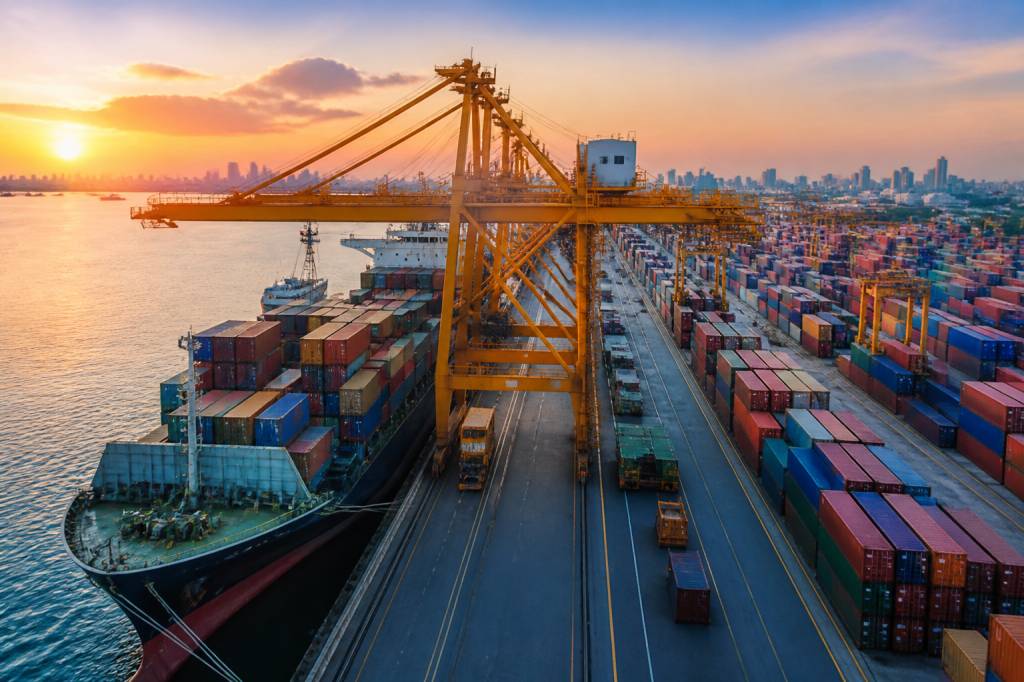
The disruption in the Red Sea, periodic congestion in major ports, and rerouting around geopolitical flashpoints have reminded markets that global trade relies on a surprisingly narrow set of maritime chokepoints. When those routes are stressed, costs rise quickly. Delivery times lengthen. Inventory management gets harder. And margins, especially in low-margin sectors such as retail and consumer goods, can take a hit.
During the pandemic, freight rates on major routes soared, revealing just how sensitive global pricing can be to transport constraints. That lesson has not been forgotten. Companies are now more willing to pay for redundancy, but that safety net is expensive. More inventory means more working capital. More routes mean more complexity. More complexity means more risk of execution errors.
In market terms, this supports firms with strong balance sheets, sophisticated logistics capabilities, and pricing power. It can punish businesses that rely on ultra-thin margins and just-in-time efficiency without any buffer.
Emerging Markets Are Not Moving in One Direction
It would be a mistake to treat emerging markets as a single trade bloc. Some are gaining from supply chain diversification, while others are struggling with weaker external demand, currency volatility, or higher financing costs.
Countries like Mexico, India, Vietnam, and parts of Central and Eastern Europe are attracting manufacturing investment because they offer either strategic proximity, labor competitiveness, or geopolitical alignment. Meanwhile, commodity exporters are facing a different set of trade dynamics, shaped by Chinese demand, energy markets, and global price cycles.
India is a particularly interesting case. It is benefiting from both domestic industrial policy and foreign companies seeking alternatives to China. Electronics assembly, pharmaceuticals, and auto components are among the sectors drawing attention. But infrastructure, regulatory complexity, and logistics still limit the speed at which trade reallocation can happen.
For investors, the message is simple: trade redirection creates winners, but the winners are not evenly distributed. Country selection matters. Sector selection matters even more.
What This Means for Inflation and Central Banks
Trade trends are not just a corporate issue. They feed directly into inflation and monetary policy.
If supply chains become shorter, more redundant, and more regional, some cost pressures may persist even when demand slows. That means trade reconfiguration can be mildly inflationary, especially in labor-intensive industries and sectors dependent on imported inputs. Tariffs and sanctions also act like taxes on trade, raising costs for firms and, eventually, consumers.
Central banks are watching these developments closely because inflation is no longer driven only by domestic demand. It is also influenced by geopolitics, shipping disruptions, energy trade, and industrial policy. That makes the inflation outlook more complex than in the old globalization era, when cheap imports helped keep price growth contained.
There is a subtle but important point here: if trade is structurally less efficient, then disinflation may be harder to sustain. That does not mean runaway inflation is inevitable. It means the floor under prices may be higher than it was in the 2010s.
How Investors Should Read the New Trade Map
For markets, the shift in trade patterns is less about predicting one headline outcome and more about identifying structural exposure.
Companies with diversified supply chains, strong bargaining power, and flexible production networks are better positioned than those dependent on a single geography or route. Likewise, sectors tied to industrial policy, logistics modernization, and critical infrastructure may benefit from sustained capital spending.
Some of the key themes investors are watching include:
- semiconductors and advanced manufacturing equipment
- logistics, freight, and port infrastructure
- industrial automation and supply-chain software
- energy infrastructure and LNG transport
- critical minerals and battery supply chains
- emerging-market manufacturing hubs with trade access advantages
At the same time, investors should be cautious about assuming that “trade reallocation” automatically creates durable profits. Many of these themes are already well understood and partially priced in. The real advantage lies in distinguishing between short-term enthusiasm and long-term structural change.
A More Fragmented Trade System, but Not a Broken One
It is tempting to describe current trade conditions as a retreat from globalization. That is too simplistic. Trade is still vast, still essential, and still central to the functioning of global markets. What has changed is the logic behind it.
Efficiency is no longer the only priority. Security, resilience, political alignment, and strategic autonomy now sit alongside cost. That makes the system more fragmented, but also more adaptable in some respects. Firms are learning to operate with more redundancy. Governments are using trade policy as industrial policy. Technology is reducing some barriers while creating new ones.
For readers of Economic Revue, the key takeaway is straightforward: international trade is no longer a background variable. It is a live driver of market performance, corporate strategy, and inflation dynamics. And unlike many financial themes, this one is not going away after the next earnings season.
The global trade map is being redrawn in real time. The markets that understand that first will probably react best.